Sun and Steel by Yukio Mishima: A Review for Men Over 40
In this article
Some books change how you think about your body. Sun and Steel is one of them, and it is also one of the most uncomfortable. It was written by a man who built himself into an athlete in his thirties, wrote beautifully about why it mattered, and then died in a way that still divides opinion. I have read it, and I think it deserves a careful, honest review.
This isn't an endorsement of the author. It's a look at the ideas that hold up, the ones that don't, and why parts of the book fit so closely with how I think about strength, health and the second half of life.
Who was Yukio Mishima?
Yukio Mishima was the pen name of Kimitake Hiraoka, born in Tokyo on 14 January 1925. As a child he was raised largely by his grandmother, who kept him indoors, away from sport and away from other boys. His father, a government official, steered him towards a safe career. He studied law at the University of Tokyo and worked briefly at the Ministry of Finance before becoming a full-time writer.
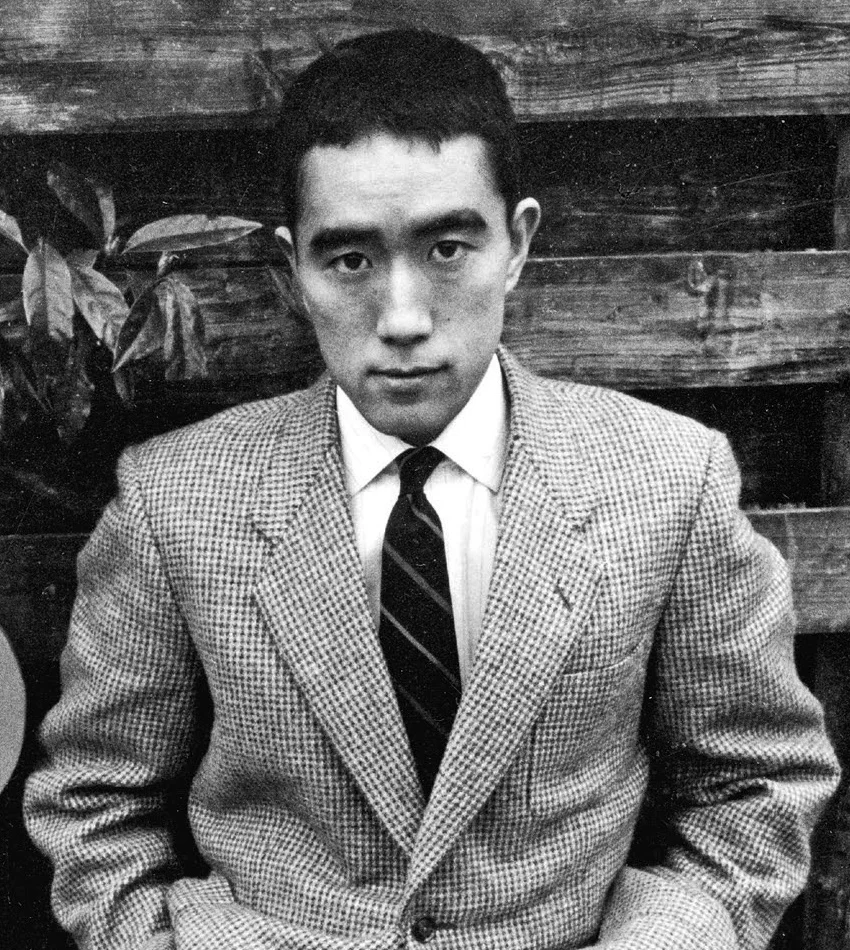
His novel Confessions of a Mask made him famous in 1949, and he went on to write novels, plays and essays at a remarkable rate. He was nominated for the Nobel Prize in Literature several times in the 1960s. He also acted, posed for photographers and became a public figure in a way few novelists do.
In 1955, at about thirty, he started bodybuilding. The pale, bookish young man became a tanned and muscular one, and he kept training for the rest of his life. Sun and Steel is his account of why.
What the book is
Sun and Steel (Taiyo to Tetsu in Japanese) first appeared in a magazine in 1965 and was published as a book in Japan in 1968. John Bester's English translation followed in 1970. It is short, and it isn't a training manual. It is a strange, intense, autobiographical essay, with a brief piece about a flight in a jet fighter and a poem, "Icarus", added at the end.
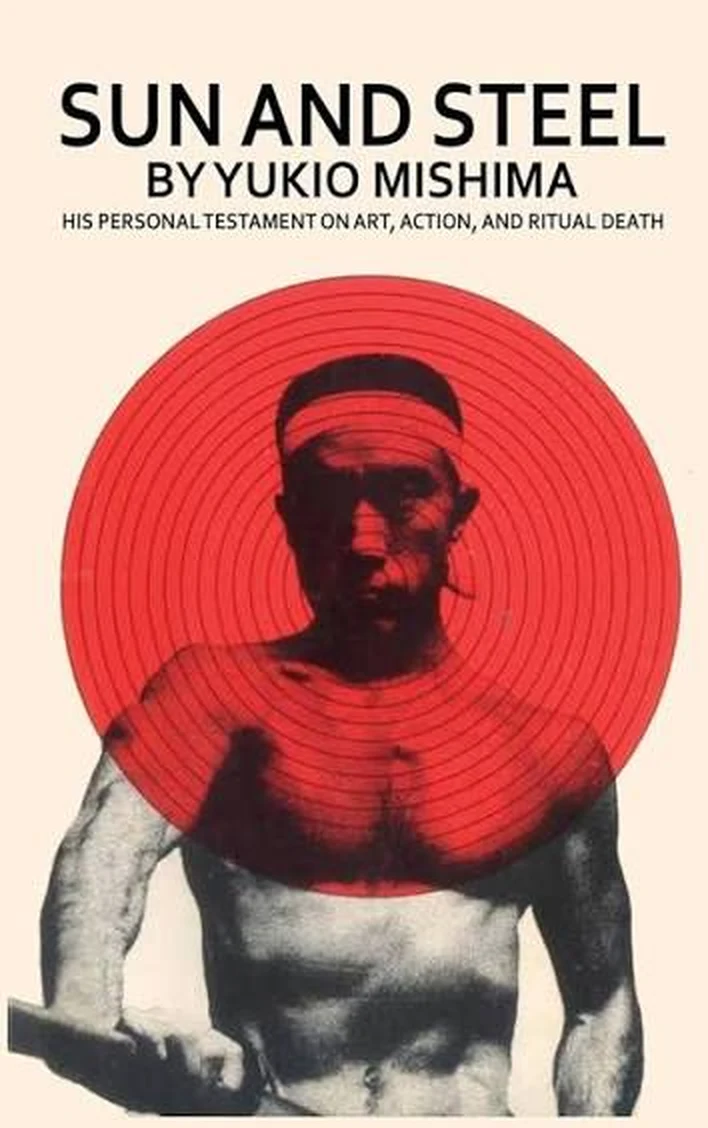
The title is literal. The sun is the daylight he trained in, and the steel is the weights, along with the sword practice of kendo. Together they stand for the physical life he came to value above the life of words.
Words versus the body
The core of the book is a simple and radical idea. Mishima had lived his whole early life in words, and words, he came to feel, had cut him off from reality. Writing, thinking and talking about experience was not the same as having it.
Training changed that. As he lifted, he felt he was learning a second language, one made of muscle, effort and endurance. It told him things about himself that words could not. He saw the body not as a machine for carrying the brain around but as a way of knowing. His ideal was the old samurai one, pen and sword together: a man whose mind and body were developed in balance.
He also writes about the sun, about the pleasure of working hard under open sky, and about how that daily discipline remade his sense of who he was. Readers have noticed that the sun works on more than one level in the book. It is the plain daylight on his skin. It is also the rising sun of his country, which he came to link with his political ideals. And it is a private symbol of the energy that drives a man to change himself. I'm interested in the first and the third.
That distinction matters. The plain version, a man who trains outdoors and learns something about himself, is one anyone can use. The grander versions are where the book starts to lose its footing.
How he used sun and steel
Mishima's method was not complicated. He lifted weights regularly, ran, boxed and practised kendo, and he did a good deal of it outdoors. Over time, by his own account, he went from a pale, bookish writer to a man proud of his physique.
The lessons here are plain ones. Progress came from regular, repeated effort, not from heroic single sessions. Resistance training changed his body. Daylight and fresh air changed his mood and his energy. And starting at thirty, with no background in sport, did not stop him. A word of caution on the sun: it is good for mood and vitamin D, but burning is not, so build exposure gradually and protect your skin.
His politics and his death
A review that skipped this would be dishonest. Over the years Mishima's politics moved sharply to the far right. He revered traditional Japanese culture and the emperor, and he opposed communism, postwar pacifism and what he saw as Western materialism. In 1968 he founded the Tatenokai, the Shield Society, a small private militia that trained in the martial and nationalist ideals he admired.
On 25 November 1970 he and four members of the group entered a Self-Defense Forces base in Tokyo and tried to persuade the soldiers to rise up and overthrow the postwar constitution. The soldiers did not rally to him. The attempt failed, and Mishima then took his own life by ritual suicide. He was 45. The episode, known in Japan as the Mishima Incident, remains controversial, and people still argue over whether it was a political act, an artistic one, or both.
Critics often read Sun and Steel as a key to that ending. In the book he links physical beauty, action and a willing death, and he treats an early end at the height of one's powers as something admirable. That is where I stop following him.
Where I part company with him
I don't share his politics, and I don't accept his romance with dying young. A body built to be thrown away is a strange use of a body. The reason to build strength after 40 is the opposite: to stay capable, independent and useful for the next thirty or forty years.
His love of pain and perfection is also worth questioning. Training that makes you feel more alive is a good thing. Training as a form of self-punishment, or as a way of chasing an ideal image, is not. The book shows how easily a good idea can be pushed too far.
What fits my philosophy
Take away the ending and there is a lot here that fits what I teach.
- Mind and body are one project. I don't separate strength from mindset. Mishima's discovery, that a man who lives only in his head loses touch with himself, is one I see in many men over 40 who have spent decades at a desk.
- The body is a way of knowing. Lifting teaches you what you can bear, what you avoid and what you are capable of. That is self-knowledge you can't get from reading alone, and it feeds straight into confidence and self-trust.
- It is never too late. He started at thirty with no sporting history. Plenty of men start at fifty. The method is the same: small, repeated, consistent effort.
- Discipline beats motivation. His results came from showing up, which is the whole point of the habit triggers approach and of tiny daily actions.
- Get outside. Sun, air and open space matter. I've written about this in the rucking guide, and it is one of the simplest changes a man can make.
- The body keeps a record. In the second half of life, what you do repeatedly becomes who you are. A man who trains three times a week for a year has a different sense of himself, and a different back, from the man he was. That quiet identity shift is what I'm after with every small action I teach.
- Strength is for life. Steel, in my version, means the sensible weekly plan in the strength training guide, not a performance for an audience.
Should you read it?
Yes, with your eyes open. It is a short, vivid, sometimes overwrought book, and the best parts are about what training does to a man's sense of himself. Read it as a study of an extraordinary and troubled mind, not as a guide to living. Take the sun and the steel. Leave the rest. It is on my recommended books list.
Sources and further reading
- Wikipedia: Sun and Steel (essay). Publication history and main themes.
- Wikipedia: Yukio Mishima. Biography, politics and the 1970 incident.
- EBSCO Research Starter: Sun and Steel. Structure and themes of the book.
- The Point: on Sun and Steel. An essay on the book's ideas and its critics.